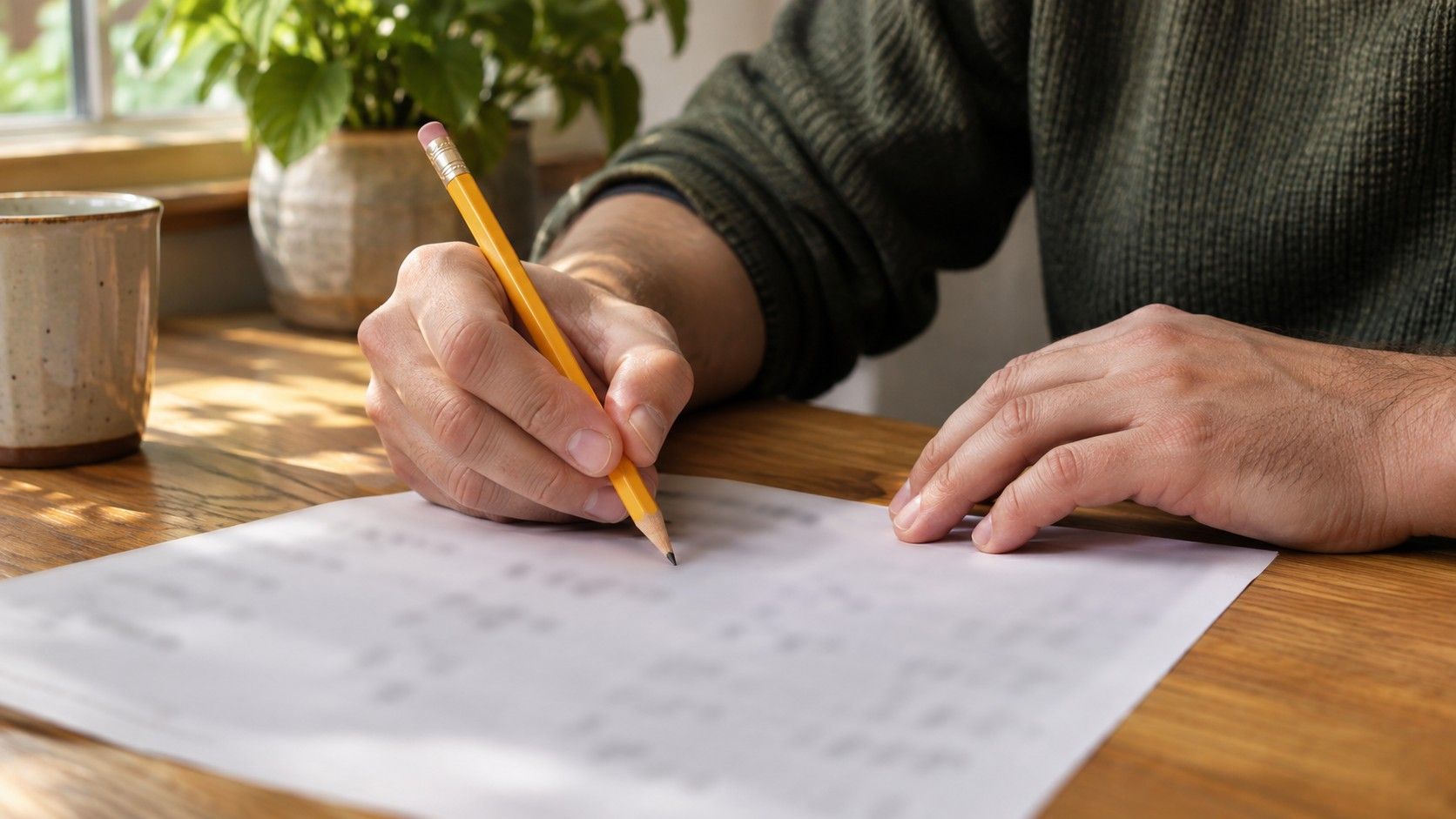
An NYPD exam preparation plan works best when it starts with the examination you actually booked. A shelf of police test books can create plenty of activity without improving the abilities your notice describes. Set aside one evening to identify the current exam, collect the official instructions and test your present habits. Then let your errors decide what deserves the next week of work.
Choose the correct exam before buying materials
The Notice of Examination is the starting document. Read the title, exam number and application instructions together. A general police guide may cover legal terminology or material used by a different agency; its length does not make it a match for your appointment. Keep the notice beside the official tutorial and make a short list of the abilities each describes.
Choose materials by the task they make you perform. A written-comprehension exercise should require evidence from a passage. An ordering exercise should make you apply stated constraints. Memorizing penal-law facts is a different activity. Unless the current instructions call for that knowledge, it should not displace work on the abilities being assessed.
Keep application requirements on another page. Being allowed to take an exam, receiving a score and meeting appointment requirements are separate stages. If an age, education or credit rule affects you, copy the exact wording and source date into your records. An old forum answer is a poor substitute for the notice governing your own exam.
Take a diagnostic that reveals your habits
Take a small unfamiliar set before building an ambitious schedule. Work in a quiet place, follow the stated instructions and mark any answer that felt uncertain. Record both correct answers and the time you spent. A lucky guess belongs in the review pile even when the answer key gives you credit.
For each miss, identify what happened before you look at the explanation. Did you overlook the word except, confuse two names, add a fact that the passage never supplied, or misunderstand an ordering rule? These produce different remedies. A broad label such as reading problem is too vague to tell you what to practise tomorrow.
One useful diagnostic might show that you understand passages but repeatedly choose an option with an unsupported extra detail. The next session should focus on comparing each option with the text, not on reading a longer book. A small, well-described weakness is easier to fix than a disappointing overall percentage.
Turn a missed question into a useful drill
Write an error entry in four parts: the task, your mistaken reasoning, the supporting evidence and a rule for next time. For example: I chose an answer because it sounded likely; the passage only established that the vehicle was parked; next time I will separate an observed fact from a guessed reason. This is a reusable lesson.
Return to the entry after a day or two with a new example. If you remember the original answer, that does not show the habit has changed. Alter the names, order or wording and explain the new solution without looking at the old one. Keep the explanation short enough to recall during a timed set.
Do not transcribe entire answer explanations into a notebook. That can feel productive while leaving your own reasoning untouched. Write the sentence that would have prevented your error. When several entries repeat that sentence, combine them into one focused drill and retire the duplicate notes.
Add timing without training yourself to rush
Start timing once you can explain the task accurately. A first timed set is a measurement, not a verdict about your ability. Note whether you spend too long reading, comparing options or checking answers. Those are different points of friction, and each can be practised on a smaller exercise.
Use the actual appointment instructions for the full-test limit and navigation rules. In ordinary practice, a short block of several questions is enough to reveal whether you get stuck on one item. If review or skipping is permitted in the real interface, rehearse that method. Never assume a feature exists because a commercial simulator offers it.
Set a personal stopping rule for unproductive rereading. After a deliberate second pass, identify what remains uncertain and choose the best supported option under the instructions. Your goal is controlled decisions across the set. Speed earned by guessing at every difficult question simply conceals the skill you still need to develop.
Keep appointment preparation separate from studying
Studying and attending an appointment need separate checklists. Confirm your admission instructions, identification, location and travel plan before the last evening. Look for restrictions on devices and materials in the current notice. A practice app on your phone is useful at home; that does not make the phone a permitted exam aid.
A modest weekly routine is easier to sustain than a dramatic weekend. Try three focused skill sessions, one mixed set and one review of recurring errors. Adjust the balance after fresh evidence. If work or family commitments remove a session, resume at the next useful task rather than doubling everything the following night.
During the final days, use familiar routines and protect sleep. Read the appointment documents again and pack what they require. Leave disputed eligibility or scheduling questions to the responsible office through its stated channel. The useful outcome of preparation is a repeatable way to read, reason and check your work when the questions are unfamiliar.
Keep a separate count of answers changed during review. If you often replace an evidence-based first choice with an unsupported alternative, rehearse checking the exact disputed phrase before switching. If changes usually correct a missed qualifier, leave deliberate review time for that feature. Neither always trust your first answer nor always change it is a useful universal rule; your own fresh practice records can reveal the specific behaviour to improve.